
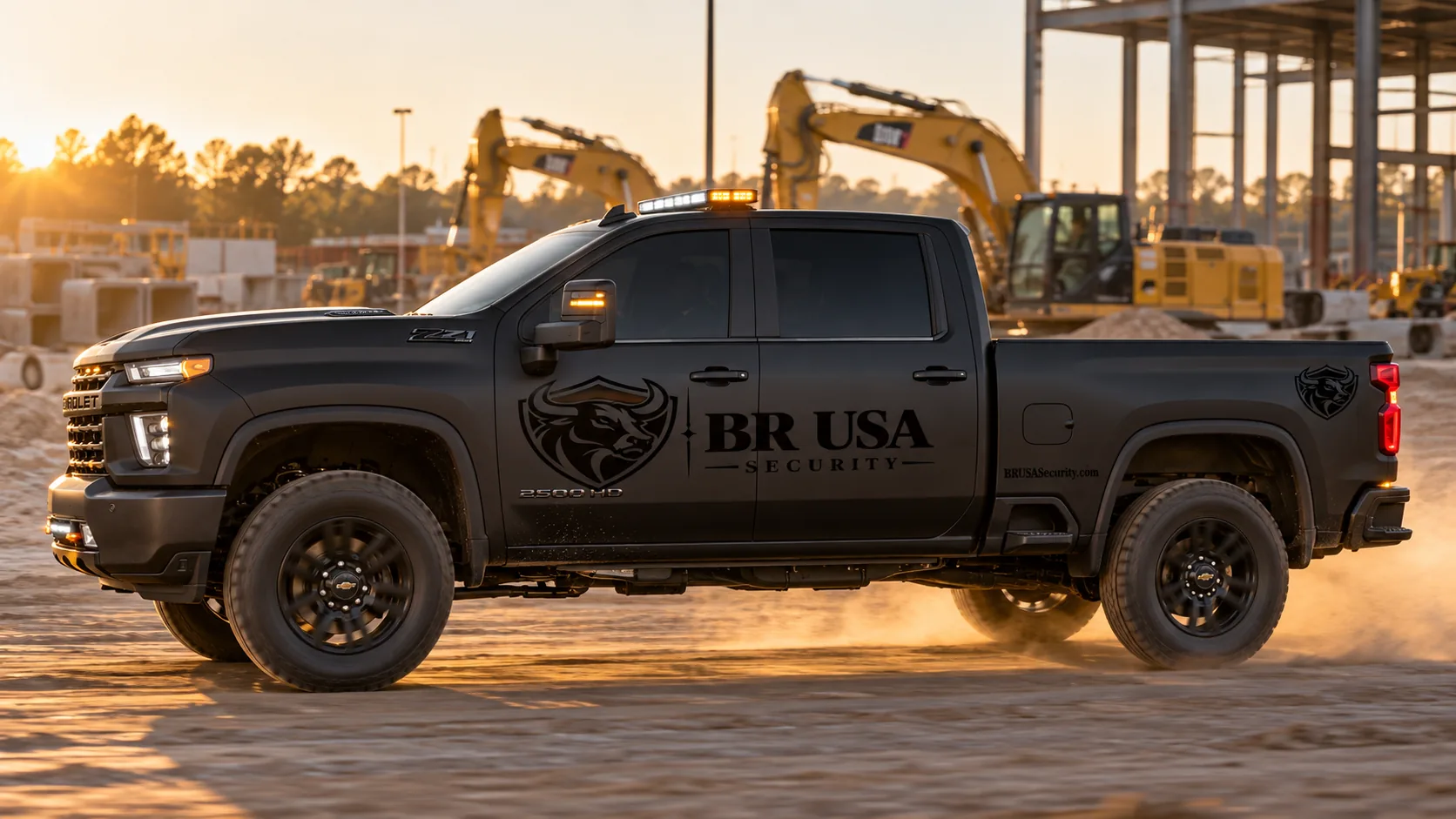
The short answer: Construction sites get hit by equipment theft, material theft, trespass and fire. South Carolina has ranked among the top states for heavy equipment theft, and most stolen machines are never recovered. Effective jobsite security layers equipment controls, lighting and fencing with a visible after-hours presence, timed to the riskiest phases of the project.
Charleston keeps building. Apartments in North Charleston, subdivisions in Summerville, hotels downtown, warehouses near the port. Every one of those projects spends most of its life unattended: nights, weekends and holidays, with equipment and materials sitting in the open.
Thieves know the schedule better than most superintendents think. Here's how jobsites actually get hit and what works to stop it.
Threat 1: Heavy equipment theft
Equipment theft is a national problem with a South Carolina accent. In the 2014 national data, 11,625 pieces of heavy equipment were reported stolen, and South Carolina ranked fourth in the country with 660 thefts, behind only Texas, North Carolina and Florida. Only about 23% of stolen equipment was recovered that year.[1]
The National Insurance Crime Bureau has estimated that equipment theft costs owners somewhere between $300 million and $1 billion a year. The joint NER/NICB reports also note that theft concentrates where construction activity is high, because that's where the machines are.[2]
Why so few machines come back: equipment often isn't titled or registered like a car, thefts are frequently discovered late, and serial numbers are rarely recorded where police can use them.
What helps: the NICB has recommended keeping a photo archive and a list of PIN and component serial numbers for every machine, and using telematics and geofencing as deterrents.[3] It has also suggested removing fuses and circuit breakers when equipment isn't in use and installing hidden fuel shutoffs.[1]
Threat 2: Materials and tools
Materials disappear in phases:
- Delivery days: lumber, roofing, wire spools and pallets staged a day early.
- Rough-in: copper pipe and wire, easy to carry and sell.
- Finishes: appliances, HVAC condensers, fixtures and flooring.
The common thread is timing. A $40,000 appliance delivery sitting in an unlocked unit over a holiday weekend is an invitation.
Threat 3: Trespass
Unsecured jobsites draw people: kids exploring, people looking for shelter, scrappers scouting, neighbors cutting through. Trespassers create theft risk, but also injury risk around open excavations, scaffolding and unfinished floors, and liability questions nobody wants to answer.
Threat 4: Fire
Buildings under construction burn more than most people realize. NFPA research reports an annual average of about 4,300 fires in structures under construction during 2016-2020.[4] For 2013-2017, NFPA reported 3,840 fires a year in structures under construction, causing an average of $304 million in direct property damage annually, and residential structures such as apartments and condos accounted for about 75% of them.[5]
Unfinished buildings are vulnerable because fire protection systems often aren't installed or working yet, materials and debris are combustible, and sites are frequently unsecured, which leaves them exposed to intentionally set fires.[4] NFPA 241 is the standard for safeguarding construction, alteration and demolition operations.[6]
Large wood-frame multifamily projects are the nightmare case: a single after-hours fire can destroy months of work and threaten neighboring buildings.
The layered jobsite security plan
No single measure covers everything. Layers do.
Layer 1: Make the site hard to use - Immobilize equipment and record serial numbers. - Lock up small tools and high-value materials daily. - Schedule deliveries for just-in-time installation, not three days early.
Layer 2: Make the site hard to enter - Perimeter fencing with locked gates, checked daily. - Lighting on entry points, storage and equipment parking. - Signage that names the security provider.
Layer 3: Make the site hard to ignore - Cameras for evidence and remote monitoring. - A visible after-hours presence, such as a marked patrol vehicle or posted officer, during the riskiest phases.
Layer 3 is what changes behavior in real time. Cameras record what happened. An officer on site can interrupt it, call it in and document it. For an honest comparison, see patrol vehicle vs. posted officer vs. cameras.
Match coverage to the project calendar
You don't need the same coverage for 18 months. Concentrate it where risk peaks:
| Phase | Primary risk | Suggested coverage |
|---|---|---|
| Site work | Equipment theft | Overnight and weekend patrols |
| Framing | Fire, lumber theft | After-hours patrol or posted officer |
| Rough-in | Copper and wire theft | Posted officer nights and weekends |
| Finishes | Appliances, fixtures | Posted officer, especially on delivery days |
| Holidays | Everything | 24/7 coverage during shutdowns |
Gates and perimeter as a supporting layer
Fencing and controlled gates support a patrol; they don't replace one. BR USA can provide temporary fencing and gated access points as part of a jobsite plan, but our core service is the person and vehicle on site.
Building in the Lowcountry?
BR USA Security protects active construction sites across Charleston, North Charleston, Mount Pleasant, Summerville and Goose Creek with marked patrol vehicles, posted officers and nightly reports. Call (843) 606-0195 to scope coverage for your project's riskiest phases.
Frequently asked questions
What gets stolen most from construction sites?
Heavy equipment such as loaders, tractors and mowers shows up at the top of national theft reports, along with tools, copper, wire and appliances, depending on the project phase.
Is South Carolina a high-risk state for equipment theft?
Yes. In the 2014 national equipment theft data, South Carolina had 660 reported heavy equipment thefts, fourth-most in the country behind Texas, North Carolina and Florida.
Are cameras enough to secure a construction site?
Cameras help with evidence and can deter some offenders, but they don't physically intervene. Many sites use cameras plus a patrol or posted officer during high-risk phases.
When does a jobsite need security most?
Nights, weekends and holidays; when high-value materials or equipment are staged; during rough-in when copper and wire go in; and near completion when appliances and fixtures arrive.
Sources
- NICB issues heavy equipment theft report for 2014. MachineFinder (John Deere). Accessed October 3, 2026.
- 2015 Equipment Theft Report. National Equipment Register (NER) and National Insurance Crime Bureau (NICB). Accessed October 3, 2026.
- Less equipment is being stolen in the U.S., but getting your stuff back is still a big problem. Equipment World. Accessed October 3, 2026.
- Construction Site Fire Safety fact sheet (NFPA Research, Fires in Structures Under Construction, 2022). NFPA, hosted by City of Salinas Fire Department. Accessed October 3, 2026.
- Fire safety on construction sites: What firefighters need to know. FireRescue1. Accessed October 3, 2026.
- Fire Safety on Construction Sites (FSMC Hot Topics). International Code Council, Fire Service Membership Council. Accessed October 3, 2026.