
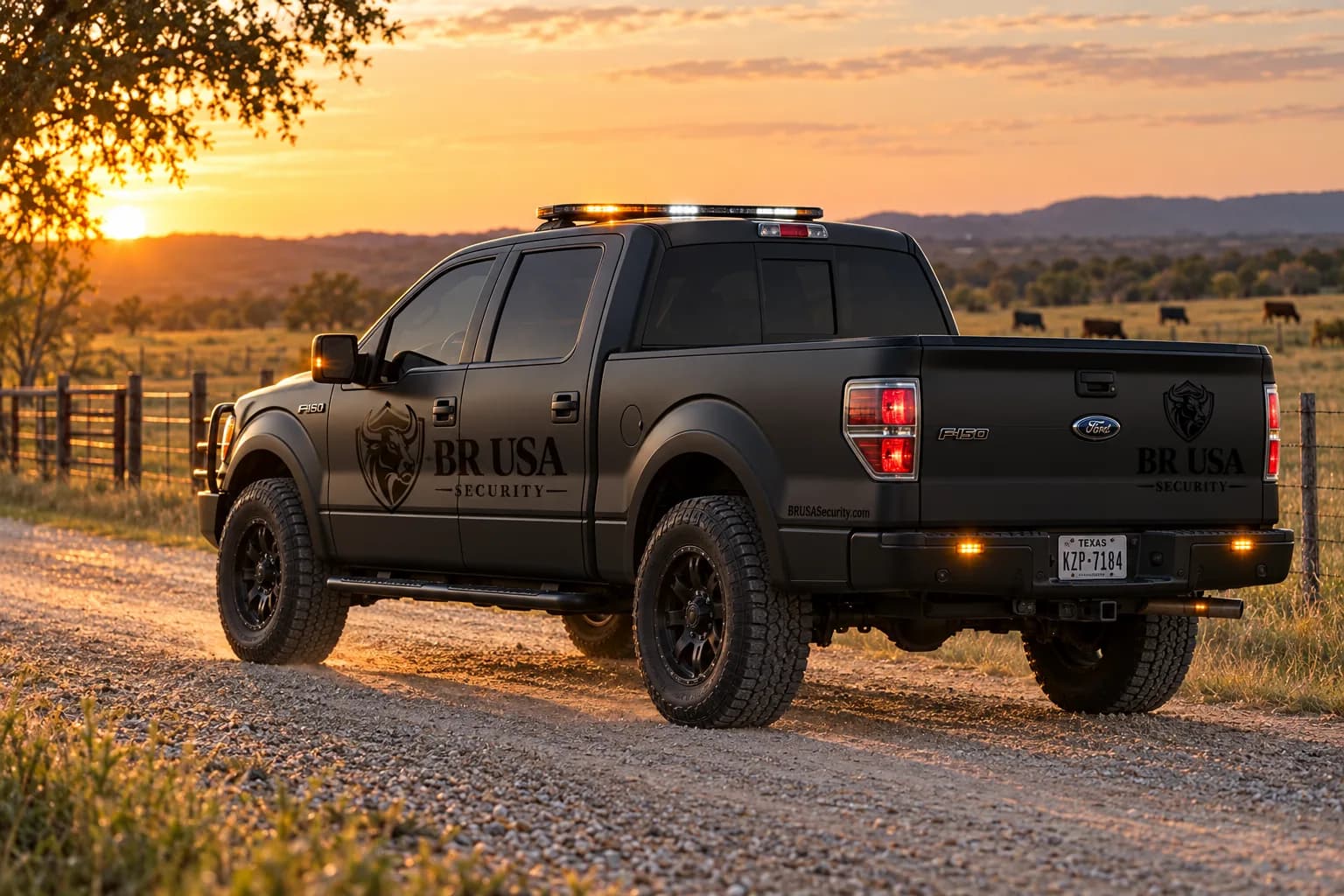
The short answer: Cameras record and can deter, but can't intervene. Periodic patrols cover multiple checks per night at a lower cost but leave gaps between visits. A posted officer with a marked vehicle provides continuous presence and immediate response. Open, damaged or high-value sites usually need continuous presence; secured, lower-risk sites can often use patrols or cameras.
Every security conversation eventually hits this question: Do I need a person, or will cameras do?
The honest answer: it depends on what you're protecting against and whether the property can protect itself between checks. Here's a straight comparison, including the cases where we'd tell you that you don't need an officer at all.
Option 1: Cameras
What they do well - Record evidence for police and insurance. - Cover large areas and many angles at once. - Deter casual offenders who notice them. - Remote monitoring can trigger alerts and audio warnings.
Where they fall short - They can't intervene. A camera watches the theft happen. - They depend on power and connectivity, which is exactly what fires, storms and outages take away. - They don't notice hazards like a leaking pipe, a smoldering hot spot or an unsafe floor. - Recordings don't bring equipment back. In 2014 national data, only about 23% of stolen heavy equipment was recovered.[1] Prevention beats evidence.
Best for: secured buildings with working power, lower-value contents, and as a supplement to people on larger sites.
Option 2: Mobile patrol
A marked vehicle visits the property on a schedule, sometimes several times a night, to inspect, check locks and document conditions.
What it does well - Visible deterrence at a lower cost than continuous coverage. - Regular documented inspections, useful for vacant properties and insurers. - Covers multiple checks per night at irregular times, so the pattern is hard to predict.
Where it falls short - Gaps between visits. Someone who watches the patrol leave has a window. - Response to an alarm depends on where the patrol is at that moment.
Best for: secured vacant buildings, lower-risk sites, and step-down coverage after an emergency.
Option 3: Posted officer with a marked vehicle
An officer stays on the property for the entire shift, positioned where they can see vulnerable entry points and be seen from the street.
What it does well - Continuous presence. No gap for anyone to wait out. - Immediate response: intervene, call police, document. - Access control: checks and logs every person and vehicle. - Hazard awareness: notices water, fire, structural changes and weather damage. - Works when systems fail. No power, no internet, no problem.
Where it falls short - Highest hourly cost of the three. - Overkill for a locked, alarmed building in a quiet area.
Best for: open, damaged or unlockable buildings; active construction during high-risk phases; anything with high-value assets staged in the open; post-fire and post-storm properties.
Side by side
| Cameras | Mobile patrol | Posted officer | |
|---|---|---|---|
| Presence | Continuous (if powered) | Periodic | Continuous |
| Can intervene | No | During visits | Yes |
| Works without power | Limited | Yes | Yes |
| Access control | Remote only | No | Yes |
| Notices hazards | Rarely | During visits | Yes |
| Relative cost | Lowest | Middle | Highest |
How to decide in 60 seconds
Ask three questions:
- Can the property lock and power itself? If no, you need continuous presence.
- Would one bad night cost more than a month of coverage? If yes, buy presence, not just evidence.
- Do people need to come and go? If contractors, adjusters or tenants need managed access, you need a person.
Two or more "need a person" answers point to a posted officer. Otherwise, a patrol or cameras, or both, may be enough.
The setup we recommend most
For most of our emergency and construction work, the strongest setup is a posted officer with a marked vehicle during high-risk hours, plus cameras or patrol checks during lower-risk hours, scaled down as the property is secured. It puts money where the risk is.
Not sure which fits? Tell us about the property and we'll give you a straight recommendation, even if it's "you don't need us yet." Call (843) 606-0195 or see our security services.
Frequently asked questions
Is a security guard better than cameras?
They do different jobs. Cameras provide evidence and some deterrence; an officer can intervene, control access, notice hazards and document conditions. Open or damaged properties generally need a person; secured, lower-risk properties may be fine with cameras.
What is the difference between a mobile patrol and a posted officer?
A mobile patrol visits a property periodically and leaves between checks. A posted officer stays on site for the whole shift, which provides continuous presence and immediate response.
What is the most cost-effective security option?
The one matched to your actual risk. Over-buying wastes money on a secured building; under-buying an open building can cost far more in a single loss.
Can I combine cameras with a security officer?
Yes, and it often works best: cameras extend coverage across a large site while the officer responds, verifies and documents.
Sources
- NICB issues heavy equipment theft report for 2014. MachineFinder (John Deere). Accessed October 3, 2026.