
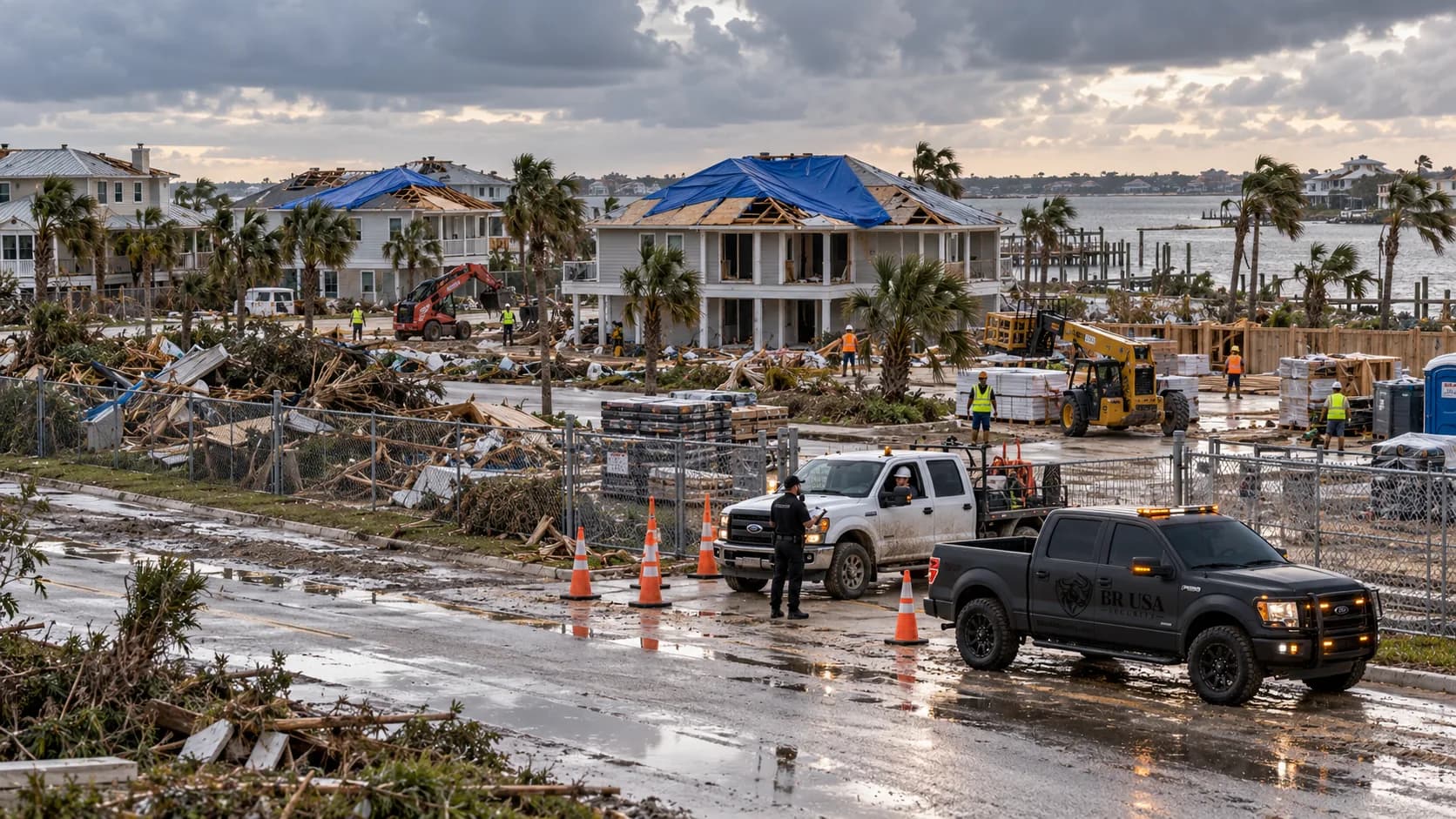
Help when disaster hits home.
When storms, floods and fires hit, organized people make the difference. Our community response team is based in Charleston and built to deploy across the U.S. wherever help is requested. We need every kind of skill: hands-on helpers, fundraisers, marketers, organizers, apprentices, donors and people with ideas.
01Join the roster
Tell us your skills, availability, travel limits, what you could bring and any ideas you have.
02Get oriented
We follow up about how you'd like to help. Before any deployment, we cover orientation and any role-specific verification or training.
03Help when it counts
Some work happens between storms; some happens after. When an event hits, we reach out to people whose skills fit. You can always say no.
WHERE WE GO
Before you go →Rooted in Charleston. Ready for anywhere.
HOME
The Lowcountry
Charleston is home base. When storms, floods or fires hit here, the roster is ready first.
NATIONWIDE
Anywhere in the U.S.
Self-sufficient teams deploy to other states when help is requested and coordinated with local officials and relief organizations.
How deployments work →INTERNATIONAL
By invitation
International response is possible, with partner organizations and volunteers who have the right skills. Most work will be in the U.S.
International volunteering →IN THE FIELD
Where volunteers help.
SUPPLIES
Distribution
Staging, sorting and handing out water, food and supplies at community distribution points.
LOGISTICS
Transport and staging
Drivers, trailers and warehouse hands to move supplies where they are needed.
RECOVERY
Cleanup and trades
Debris cleanup, chainsaw work and skilled-trade support, with the right training and authorization.
COORDINATION
Communications and admin
Radio, check-in, scheduling and the paperwork that keeps a response organized.
BEHIND THE SCENES
Where your skills fit →Every skill is needed.
A response runs on far more than muscle. Some of the most important work happens long before a storm, and much of it can be done from home.
FUNDING
Donors and fundraisers
Donors, sponsors, grant writers, accountants and nonprofit advisors to fund deployments, supplies, training and insurance the right way.
Become a founding supporter →STORYTELLING
Marketing and media
Social media, writing, photo and video, design, PR, outreach and translation, so the Lowcountry knows the network exists before a storm.
Spread the word →LEARNING
Apprentices and first-timers
No experience needed. Learn logistics, teamwork and practical skills alongside experienced mentors, with safety first.
Learn while you help →LEADERSHIP
Organizers and builders
Team leads, planners, connectors and nonprofit veterans to help shape how the network recruits, trains and runs.
Bring your ideas →TECHNOLOGY
Tech and data
Simple, secure sign-ups, rosters and call trees that still work when the power and cell service are out.
Every skill is needed →BUSINESS
Business support
Vehicles, space, equipment, professional services and employee volunteers, coordinated before a storm instead of after.
How businesses help →BRING YOUR IDEAS
One person can't do it all.
We're building this now, and we'd rather build it with you than for you. If you've ever thought “someone should,” you might be that someone.
- Tell us what you'd build, fix or try. The volunteer form has an ideas box, and every idea is read.
- Organizers, team leads and people with nonprofit experience: we need help shaping how the network runs.
- We're preparing our 501(c)(3) paperwork. If you know nonprofit governance, grants or accounting, start there.
- Volunteers never do security work. That's handled only by trained, registered officers.
- Money helps right now. Contribute on our support page (not tax-deductible), or join the founding supporter list.
READ WHAT WE'RE BUILDING
All insights →From the community response desk.
How to Volunteer for Out-of-State Disaster Relief: What to Know Before You Deploy
Read the article →International Disaster Volunteering: When to Go, When to Give and How to Prepare
Read the article →Disaster Volunteer Go-Bag: A Deployment Packing Checklist
Read the article →Why We're Building a Community Response Team: Rooted in Charleston, Ready for Anywhere
Read the article →Every Skill Is Needed: What Disaster Volunteers Actually Bring
Read the article →QUESTIONS
Before you join.
Do I need disaster experience to join?
No. Many roles suit first-time volunteers, apprentices and students, and orientation comes before any deployment. Specialized tasks such as chainsaw work or entering damaged buildings require training and authorization first.
What if I can’t do physical work?
There’s a place for you. Fundraising, grant writing, marketing, writing, design, tech, scheduling, translation and coordination are all needed, and many of those roles can be done from home between storms.
Do volunteers do security work?
No. Security is handled only by trained, registered BR USA officers. Volunteers support logistics, supplies, communications, cleanup and the behind-the-scenes work that keeps a response running.
Is this a job or an apprenticeship program?
No. It’s a volunteer interest list, and volunteers aren’t paid. If you’re looking for paid security work, apply on our careers page.
Where does the team deploy?
Charleston is home base, and the team is built to deploy anywhere in the U.S. when help is requested and coordinated with local officials and relief organizations. International response is possible by invitation. On the volunteer form, you choose how far you’d travel.
Can I contribute money?
Yes, on our support page. Contributions go to Bouncy Rentals USA LLC, a for-profit company affiliated with BR USA Security, and are not tax-deductible. Our 501(c)(3) paperwork is in progress; once it’s approved, tax-deductible gifts will go to the nonprofit.
Do I have to say yes when you call?
Never. Joining the roster doesn’t obligate you to deploy. We reach out to people whose skills and availability fit, and you can always decline.
Volunteer or support the response.
Volunteers add their skills, interests, travel range and ideas to the roster. Businesses and individuals can offer equipment, space, services or funding interest; donors can also use our founding supporter page. Looking for paid security work instead? See careers. Fields marked * are required.